Choosing the right countertop material is one of the most important decisions in any kitchen renovation. Among the most popular premium surfaces today are quartz and quartzite, two materials that sound similar but are fundamentally different in how they are made, how they perform, and how they look.
Many homeowners researching countertops encounter both materials and assume they are variations of the same stone. In reality, quartz and quartzite have different origins and different strengths. Understanding those differences can help you select a surface that matches your lifestyle, cooking habits, and design vision.
What Quartz Countertops Actually Are
Quartz countertops are engineered surfaces made by combining natural quartz crystals with resins and pigments. The mixture is compressed under intense pressure and heat to create slabs that are extremely durable and consistent in appearance.
Because quartz countertops are manufactured rather than quarried directly from the earth, their patterns and colours can be controlled with precision. This is why quartz slabs often mimic the appearance of marble or concrete while maintaining consistent colour tones across the entire surface.
For homeowners who want a predictable aesthetic, quartz can be very appealing. The surface will look almost exactly like the showroom sample, with minimal variation between slabs.
Another advantage of quartz is that it is non-porous, which means it resists stains without needing periodic sealing.
What Quartzite Is and Why It’s Unique
Quartzite, despite its similar name, is a completely natural stone. It begins as sandstone that undergoes intense heat and pressure deep within the earth, transforming into a dense and extremely durable material.
The result is a stone with a crystalline structure and natural movement that can resemble marble but typically offers greater durability.
Quartzite slabs often feature dramatic veining, flowing mineral patterns, and subtle colour variation that makes each slab unique. Because of this natural formation process, no two pieces of quartzite are exactly the same.
Homeowners who value the authenticity of natural materials often gravitate toward quartzite for this reason.
Appearance: Controlled vs Natural
One of the most noticeable differences between quartz and quartzite is their visual character.
Quartz surfaces are designed to provide consistency and control. Manufacturers can create patterns that resemble marble, soft concrete tones, or subtle modern textures. This consistency is useful in projects where designers want the kitchen to feel clean, minimal, and uniform.
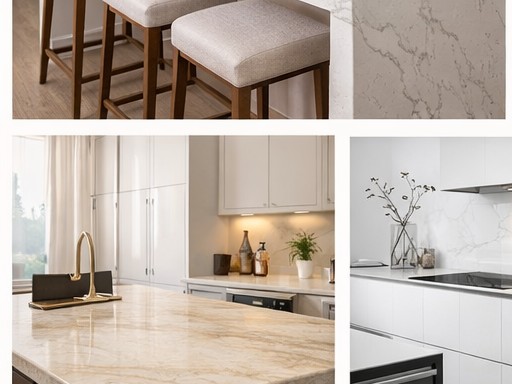
Quartzite, on the other hand, offers natural movement and depth. The mineral patterns within quartzite slabs create organic designs that feel almost artistic. Some slabs display sweeping veins or subtle crystal formations that give the surface a sense of character.
For homeowners seeking a bold focal point in their kitchen, quartzite islands often become the centrepiece of the entire room.
Durability and Strength
Both quartz and quartzite are strong materials, but they perform slightly differently under certain conditions.
Quartz countertops are extremely resistant to scratches and stains due to their engineered composition. Because the surface is non-porous, liquids are less likely to penetrate the material, making quartz easy to maintain.
Quartzite, being a natural stone, is one of the hardest materials used in countertops. It is highly resistant to scratching and performs very well in kitchens where heavy use is expected.
However, quartzite surfaces may require periodic sealing to protect against staining, depending on the specific stone.
For many homeowners, this small maintenance step is a worthwhile trade-off for the beauty of natural stone.
Heat Resistance
Heat resistance is another factor worth considering when comparing these two materials.
Quartz contains resins that can become sensitive to extreme heat. While brief contact with warm cookware is usually fine, placing extremely hot pots directly on the surface is not recommended. Using trivets or protective pads helps maintain the surface over time.
Quartzite, by contrast, is formed naturally under extreme temperatures and is generally more heat resistant. This makes it a strong option for homeowners who cook frequently or prefer the peace of mind that natural stone provides.
Maintenance Requirements
For homeowners looking for the lowest possible maintenance routine, quartz tends to be the simpler option.
Because quartz is non-porous, it does not require sealing and can usually be cleaned with mild soap and water. This convenience is one reason quartz has become so widely used in modern kitchens.
Quartzite requires slightly more attention. Periodic sealing helps protect the surface from absorbing liquids or developing stains. However, this maintenance process is straightforward and typically only needs to be done every year or two.
Many homeowners feel the natural beauty of quartzite more than justifies this small amount of upkeep.
Cost Considerations
Pricing for quartz and quartzite can vary depending on the slab selection, thickness, fabrication complexity, and installation requirements.
Quartz tends to fall within a predictable price range because it is manufactured in controlled facilities.
Quartzite pricing can vary more widely because the stone is quarried from natural deposits. Rare or highly patterned slabs may command premium prices, especially when they feature dramatic veining or unusual colours.
For this reason, viewing slabs in person at a stone yard is often helpful when considering quartzite.
Design Style and Kitchen Aesthetic
The decision between quartz and quartzite often comes down to design preference.
Quartz works particularly well in:
- modern kitchens
- minimalist interiors
- spaces with clean, uniform colour palettes
Quartzite is often chosen for:
- luxury kitchens
- statement islands
- designs emphasizing natural materials
Neither material is inherently better; they simply serve different design philosophies.
Choosing the Right Surface for Your Kitchen
When deciding between quartz and quartzite, homeowners should consider three key factors:
- Maintenance expectations – quartz requires less upkeep
- Visual style – quartz offers consistency, quartzite offers natural variation
- Heat resistance – quartzite handles heat slightly better
Visiting a showroom or slab yard can also make the decision easier. Seeing the materials in person allows homeowners to appreciate colour depth, texture, and natural movement that photographs cannot fully capture.
Final Thoughts
Quartz and quartzite are both exceptional countertop materials capable of transforming a kitchen. Each offers its own advantages, whether you prefer the engineered precision of quartz or the natural artistry of quartzite.
The best choice ultimately depends on your design vision, maintenance preferences, and how you use your kitchen every day.
Planning a Countertop Project?
If you are considering quartz or quartzite countertops for your kitchen renovation, professional fabrication and installation are essential for achieving a beautiful result.
At True Stone Surfaces, we work with homeowners across Toronto and the GTA to fabricate custom countertops using premium slabs. Our team can help you explore materials, compare slab selections, and plan a layout that complements your kitchen perfectly.
Contact us to request a quote or try our countertop estimator to begin planning your project.