
The Benefits of Adding a Waterfall Edge to Your Toronto Kitchen Countertops
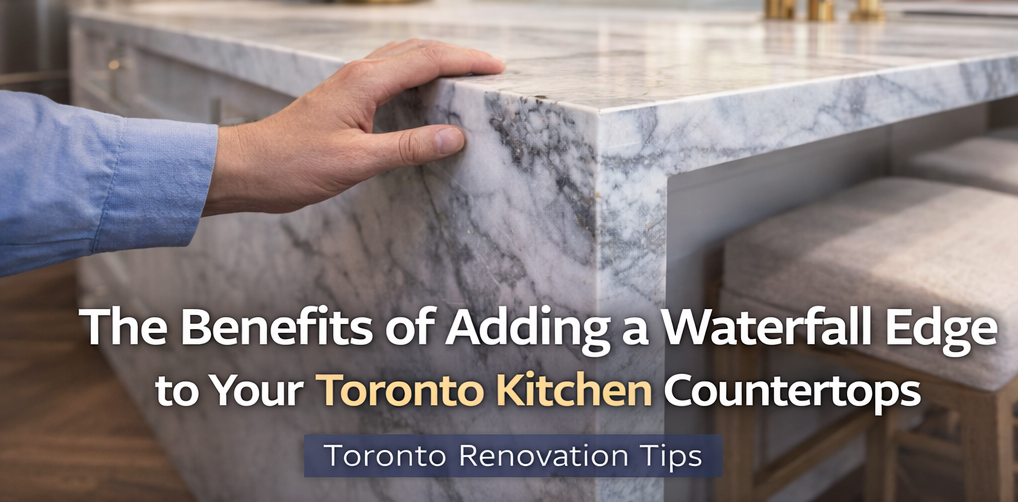
A waterfall edge countertop is one of the most striking upgrades a homeowner can add to a kitchen renovation. Instead of the stone ending at the top surface of an island or cabinet run, the material continues vertically down the side, creating a clean, uninterrupted finish from top to floor. The result feels architectural, refined, and unmistakably high-end.
Across Toronto and the GTA, waterfall edges have become especially popular in modern kitchens where homeowners want the island to feel like a centerpiece rather than just another work surface. This detail works beautifully in open-concept layouts, luxury custom homes, and even smaller renovations where a single premium feature can elevate the whole room.
If you are considering a waterfall island or waterfall panel for your kitchen, it helps to understand not only the visual appeal but also the practical benefits, material considerations, and installation requirements that come with it.
What Is a Waterfall Edge Countertop?
A waterfall edge is a design in which the countertop material wraps over the side of a cabinet or island and continues vertically downward. Instead of a visible end cap or exposed cabinet side, the stone creates a continuous face. In the best installations, the veining is carefully matched so the pattern appears to flow naturally from the horizontal surface down the vertical panel.
This style is often associated with quartz, quartzite, marble, and porcelain slab kitchens because these materials have the visual movement and finish quality needed to create that seamless effect.
Why Waterfall Edges Have Become So Popular
Part of the appeal comes from how visually clean the detail looks. A waterfall edge immediately simplifies the lines of the kitchen. It hides exposed cabinet ends, reduces visual clutter, and gives the island more presence in the room.
For homeowners in Toronto, where kitchen renovations often aim to maximize impact and resale value at the same time, waterfall edges offer the kind of design feature that feels custom and intentional. They photograph beautifully, look impressive in person, and help the kitchen feel more connected to current luxury design trends.
There is also a practical side: because the edge is protected by the vertical slab, the island corners and exposed end panels are less vulnerable to scuffs, dents, and wear that would otherwise affect painted cabinetry.
Design Benefits of a Waterfall Edge
One of the strongest reasons to choose a waterfall edge is the visual statement it creates. In many kitchens, the island is the first thing people see when they enter the room. Wrapping the stone down the side transforms the island into a sculptural element.
- It creates a stronger focal point. The island reads as a solid architectural object rather than a cabinet with a slab placed on top.
- It highlights premium materials. Beautiful quartzite movement, marble veining, or bold quartz patterns become much more prominent.
- It supports minimalist design. In modern kitchens, waterfall edges reduce visual interruptions and keep the overall composition clean.
- It helps tie open-concept spaces together. In homes where the kitchen flows into the dining and living area, the waterfall detail gives the island a furniture-like presence.
Practical Benefits Beyond Appearance
Although most homeowners choose waterfall edges for aesthetics, there are also everyday functional benefits. End cabinets on islands are often exposed to foot traffic, chair movement, vacuum bumps, and general wear. A slab face protects those ends far better than painted wood or laminate panels.
This is especially useful in family homes where kitchen islands are used constantly for meals, homework, entertaining, and daily circulation. Over time, that added protection can help the kitchen continue to look finished and well maintained.
Waterfall panels can also visually hide support legs or structural elements required for larger overhangs, depending on the layout and slab design.
Best Materials for Waterfall Countertops
Not every surface creates the same effect. The most successful waterfall edges use materials that look strong and elegant from both the top and the side view.
Quartz is one of the most popular choices because it is consistent, durable, and available in many marble-look designs. It works particularly well in bright kitchens where homeowners want clean veining and easy maintenance.
Quartzite is ideal for homeowners who want a dramatic natural stone statement. Because many quartzite slabs have rich movement and depth, they can create stunning book-matched or vein-matched waterfall details.
Marble is chosen when elegance is the priority. A waterfall edge in marble can look extraordinary, though it requires more maintenance than engineered surfaces.
Porcelain slabs are also used in contemporary projects, especially when a very crisp, thin profile is part of the design direction.
What Affects the Cost?
Waterfall edges generally cost more than standard countertops because they require additional material, fabrication, and installation precision. In most cases, the vertical panel is cut from the same slab so the pattern can align properly. That increases slab usage and can affect how efficiently the material is laid out.
Fabrication is also more demanding. The stone must be cut, finished, and often mitered so the top and side join in a crisp, clean line. Pattern matching adds another level of detail. These are not shortcuts you want taken by an inexperienced shop.
For homeowners in Toronto comparing countertop estimates, it is important to ask whether the quoted price includes the waterfall panel, the mitered edge work, and the pattern matching required to make the installation look truly premium.
When a Waterfall Edge Makes the Most Sense
Waterfall edges are especially effective when the island is visible from the main living area, when the slab itself is a design feature, or when the project calls for a more modern and custom aesthetic. They also work well in kitchens where the island includes seating, because the vertical slab gives the end a clean finished look from multiple viewing angles.
They can be used in smaller kitchens too, but the proportions matter. A waterfall edge looks best when the slab, cabinetry, and overall room layout feel balanced. The detail should enhance the kitchen, not overwhelm it.
Installation Quality Matters
A waterfall edge is only as good as the fabrication and installation behind it. Poor seam work, misaligned veining, or badly finished corners will immediately stand out. This is why working with an experienced countertop fabricator matters so much on this type of project.
Accurate templating, careful slab selection, professional layout planning, and precise installation all contribute to the final result. In a high-end kitchen, those details are what separate a basic countertop job from a truly custom installation.
Final Thoughts
Adding a waterfall edge to your kitchen countertops is one of the clearest ways to make a renovation feel more elevated and intentional. It brings visual drama, protects exposed cabinet ends, and turns the island into a centerpiece that anchors the entire space.
For Toronto homeowners planning a kitchen renovation, a waterfall detail can be an excellent investment when paired with the right slab and installed by the right team. The key is choosing a material that suits your lifestyle and working with fabricators who understand how to execute the detail properly.
Thinking About a Waterfall Countertop?
True Stone Surfaces fabricates and installs quartz, quartzite, granite, marble, and porcelain countertops across Toronto and the GTA.
If you are planning a waterfall island or want to compare materials for your renovation, contact us today or use our countertop estimator to begin planning your project.